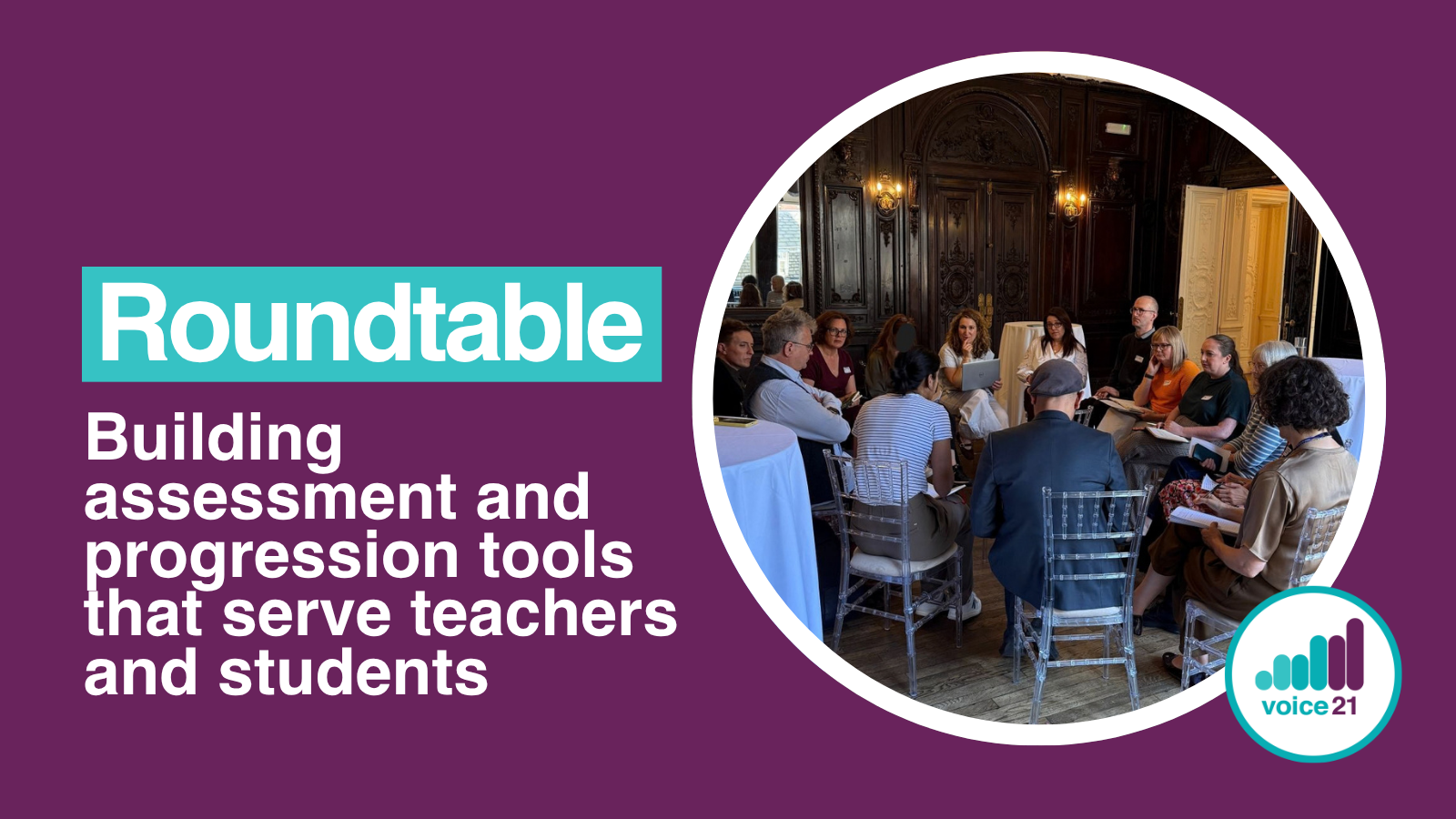
This summer, experts in linguistics, assessment, and education convened for a roundtable to tackle a critical matter: How assessment or progression tools could help teachers deliver the revised curriculum, and the risks and challenges involved.
They identified key opportunities and risks that policymakers must manage when developing a curriculum with a stronger focus on oracy, including a need to better understand progress students can make in oracy over time.
Five essential conditions for oracy assessment and progression tools
Throughout the roundtable, the panel agreed five essential conditions for building future tools that serve teachers and students alike:
- A shared definition: The sector needs a shared understanding of ‘oracy’. There was consensus on adopting the Oracy Commission’s definition: “Oracy is articulating ideas, developing understanding and engaging with others through speaking, listening and communication.“
- Empowering educators and students: The main purpose of any tool to assess oracy, or otherwise understand progression, should be to support and improve teaching and learning. They should support teachers’ professional judgement and mean that more young people take part in more purposeful classroom talk, more of the time.
- A breadth of contexts for talk: Any effective tools must acknowledge a range of contexts for talk, and not focus solely on presentational talk, which can be easier to assess:
- Presentational talk: Such as speechmaking and summarising.
- Exploratory talk: Such as collaborating, group problem-solving, testing ideas, and navigating opposing perspectives.
- Starting with existing evidence: Tools should draw directly on the existing evidence base, including foundational knowledge of how children develop language.
- Designing for inclusivity: Any new tools in development present a key opportunity to better support children with speech, language, and communication needs.
What risks were identified?
- The “good speech” trap: Constructing narrow definitions of “good speech” risks punishing students for using their natural voices and regional dialects.
- Teaching to the test: Prioritising spoken elements that are easiest to measure risks reducing oracy to a set of metrics rather than expanding access to high-quality talk, which will quickly disempower students and teachers alike.
- The data issue: Historically, it has been difficult to capture spoken language data, meaning that we don’t have an extensive evidence base to draw from. This makes the data we do have critically important, and mustn’t be overlooked.
- Exclusion risks: Failing to embed accessibility from the start could deprive students with speech, language and communication needs of the extensive benefits that a high-quality oracy education provides.
Next Steps
We’re continuing to meet with education and assessment experts, working together to develop these recommendations to help policymakers and educators alike get the best out of their oracy provision. We’re always open to partnerships – please don’t hesitate to reach out if you’re interested in working with Voice 21 on oracy assessment and provision.
Thank you to all participants and partner organisations for contributing to this roundtable:
Subject & assessment organisations: AQA, Cambridge OCR, English Speaking Board, National Association for the Teaching of English (NATE), Pearson, Speech and Language UK, The English Association, The English-Speaking Union
Academic partners: Liverpool John Moores University, University of Cambridge, University of Exeter, University of Leeds, University of Liverpool